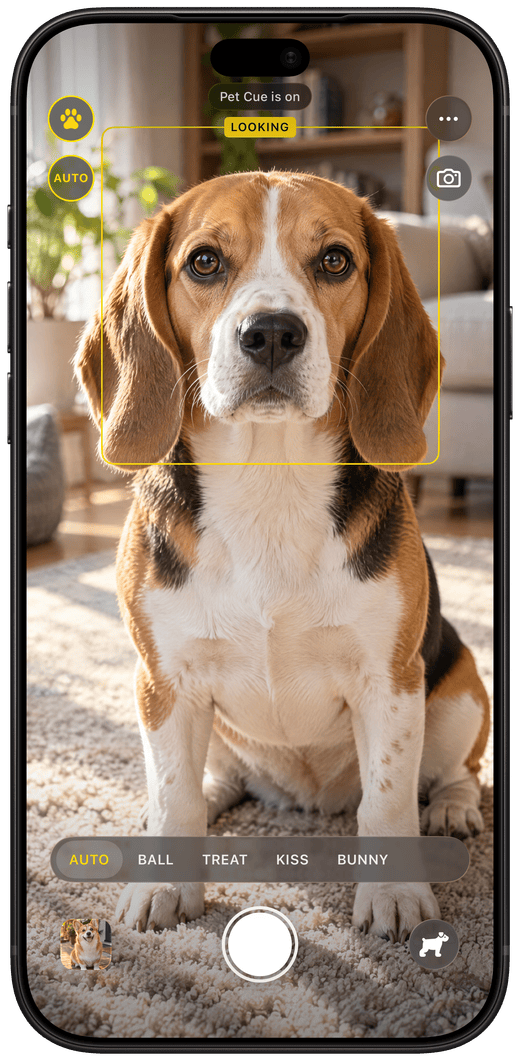
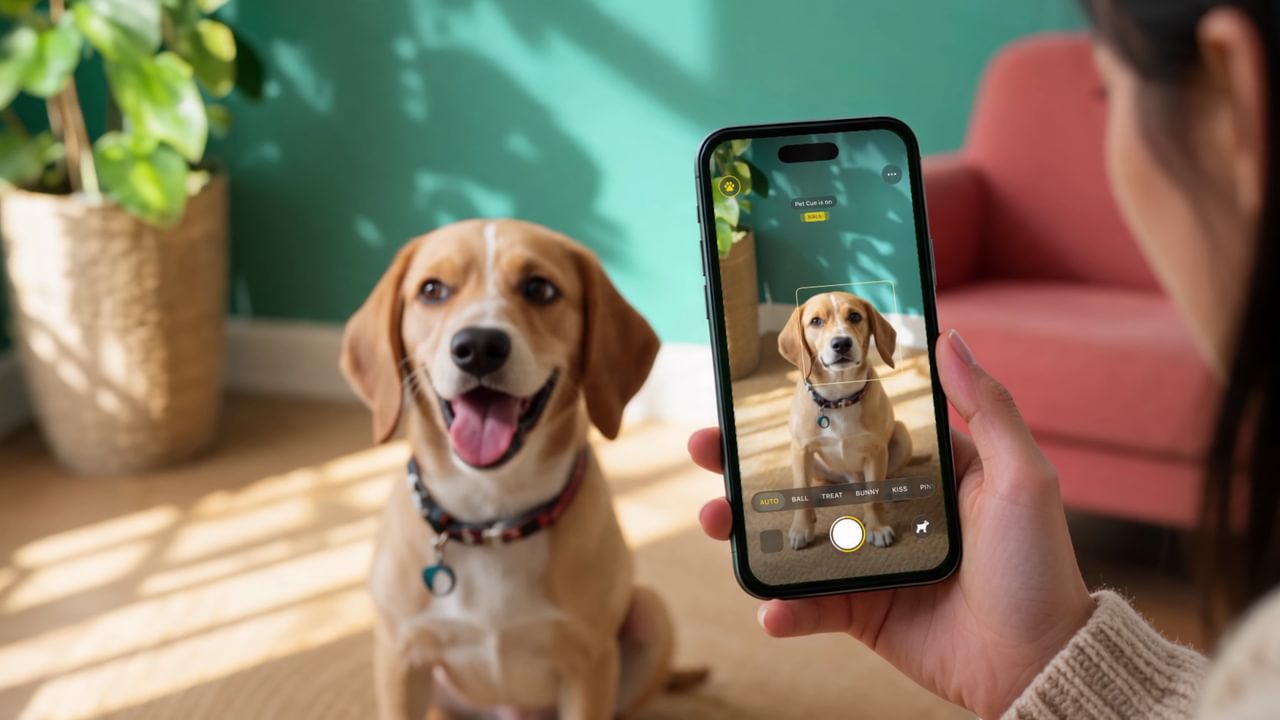
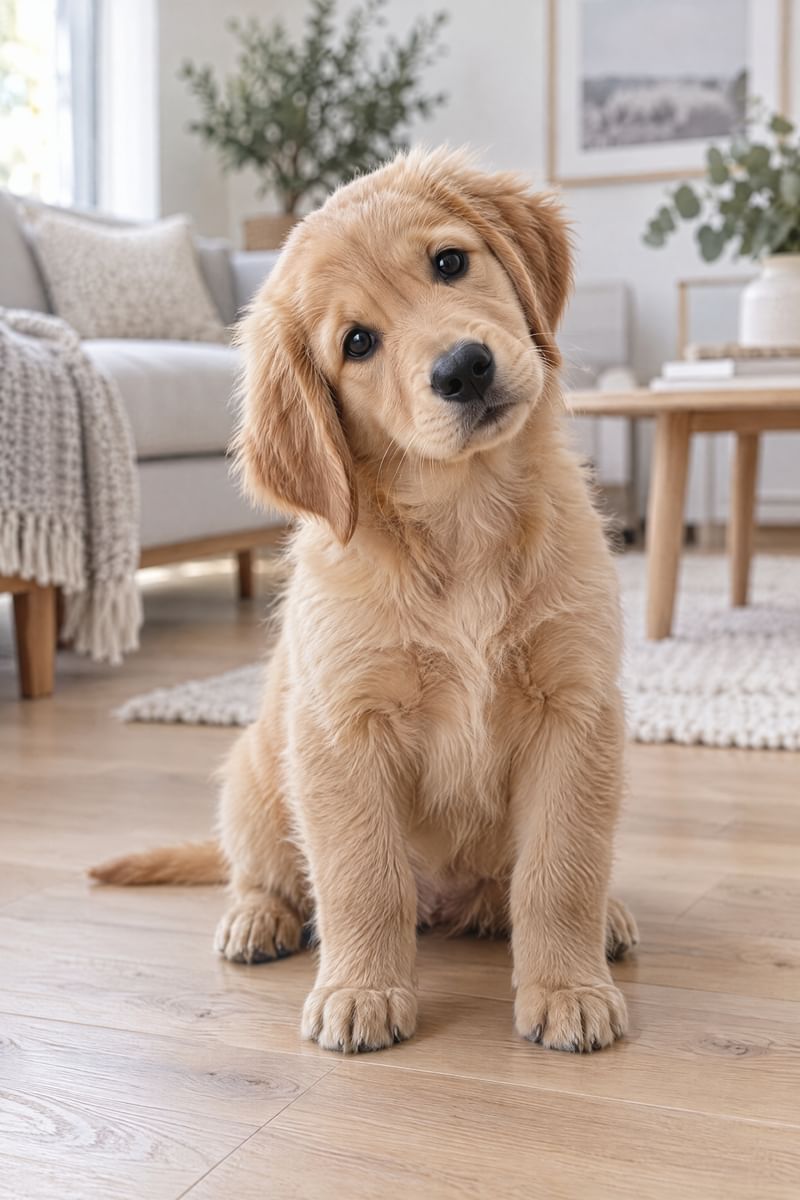
Point your phone at your dog or cat and tap the shutter once.
A cue they can’t ignore
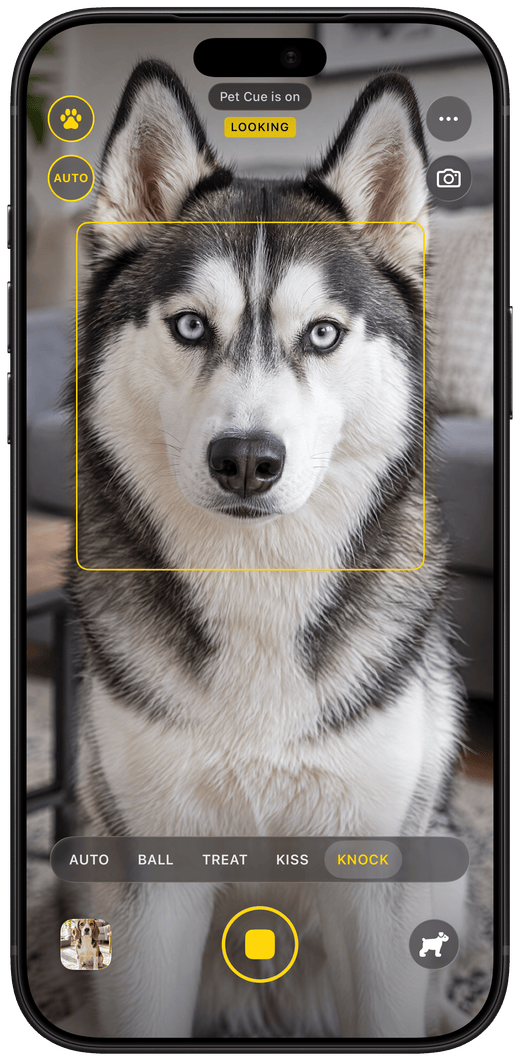
Pet Cue plays a sound made for pets, the one this pet responds to best.
They look. It shoots.
The instant their face turns to the lens, on-device AI takes the photo, and checks it for blur.
AI auto-shutter
It knows when they look.
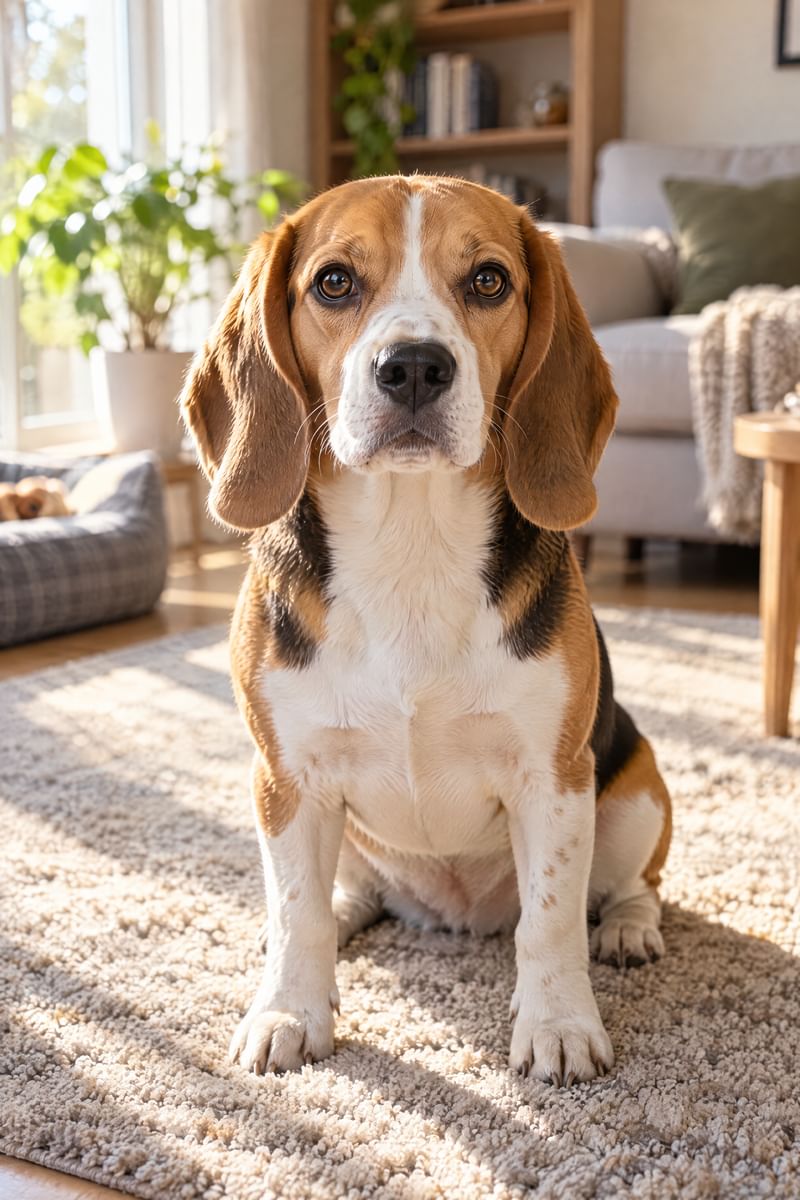
No more photos of an ear, a tail or a blur. Point the phone, tap once, and the photo is taken at the moment your pet faces the lens.
Eight checks a second. On-device pet models find your dog or cat and its eyes, nose and ears, eight times a second.
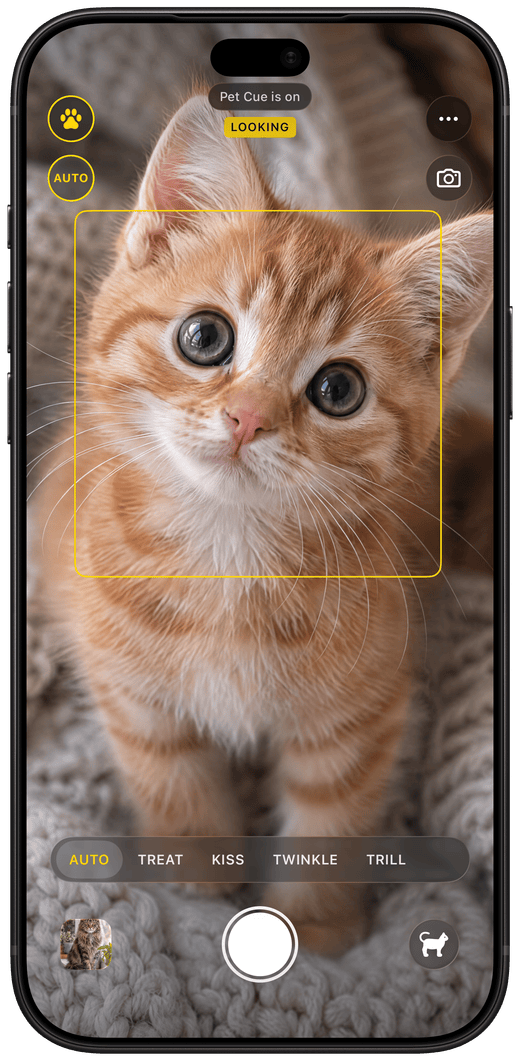
Square to the lens. Pet Cue scores how squarely the face turns to you: eyes level, nose centred between them, head neither sniffing down nor looking over the phone.
Two frames, zero lag. Two frames in a row above the line fire the shutter, and zero-shutter-lag capture keeps the frame from that very moment.
Shaggy breeds, too. When the eyes hide in the fur, Pet Cue takes a second, closer look at the pet alone.
Works with dogs and cats. It needs light and a face that fills a fair part of the frame.
LookingCats, too
Perfect Shot
Never blurry. Pet Cue checks every shot.
It doesn’t stop at a photo. It stops at the perfect one.
Locks onto the face. While it waits, focus and exposure follow your pet’s face, and the shutter stays at 1/100 s or faster: the camera raises ISO instead of slowing down.
Waits for stillness. It measures how fast your pet’s face moves, and your phone’s own movement with the gyroscope, and shoots only when the blur that motion would cause stays well under 3% of the distance between the eyes.
Checks the eyes. After every automatic photo it reads the real exposure and checks the edges at the eyes for crispness, scaled to the face, so it works for a chihuahua across the room and a cat’s close-up alike.
Keeps trying. A blurry photo is kept and marked Blurry, so you can see why, and Pet Cue keeps going until it has the sharp one. Then it stops by itself and says “Perfect shot”.
All of it on the phone, in a fraction of a second. In very dim light it may take longer, or stop after a minute and tell you that more light helps. Photos you take by hand aren’t judged.
BlurryTrying again…
Perfect shot
Moments
Catches every moment.
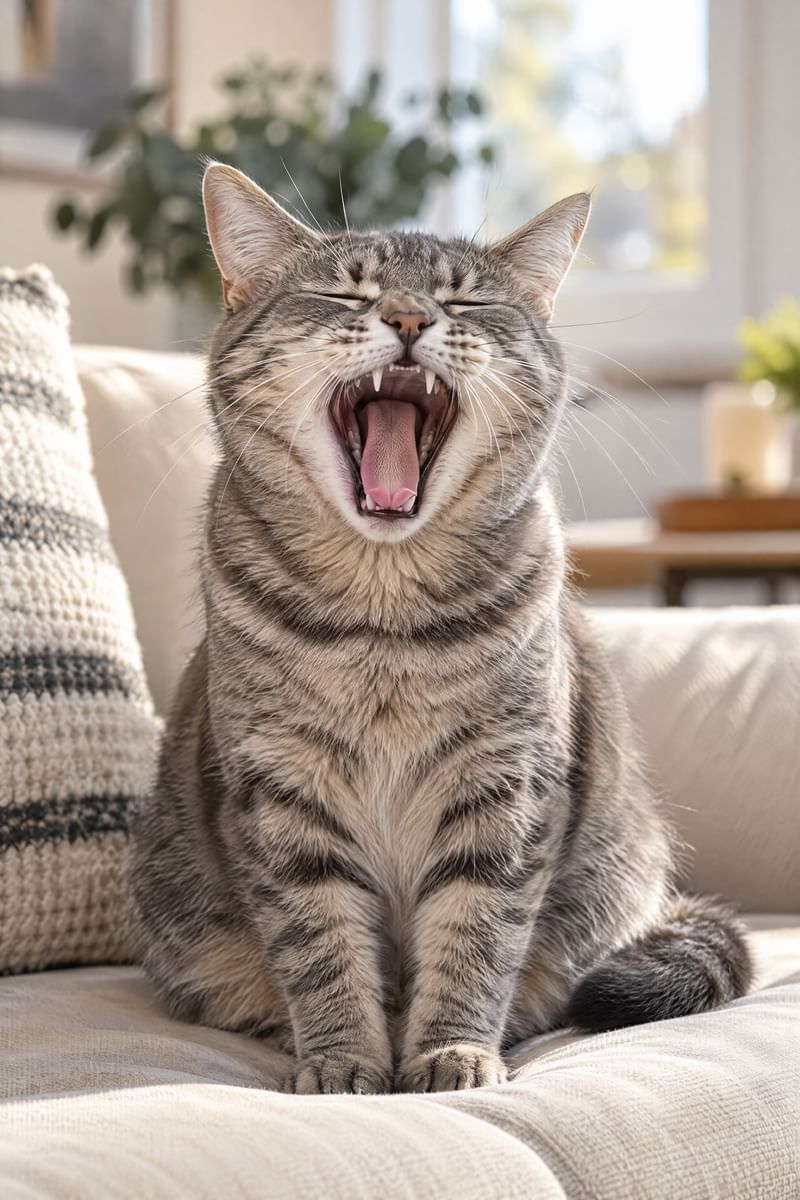
The best pet photos are rarely the posed ones. In a Multi-Shot session, Pet Cue also catches the head tilt, the yawn, the tongue-out and every new pose, even when your pet isn’t looking at the lens.
Head tilts. The line between the eyes tilts 18 degrees or more while the face is toward you. New sounds are exactly what make a dog tilt its head.
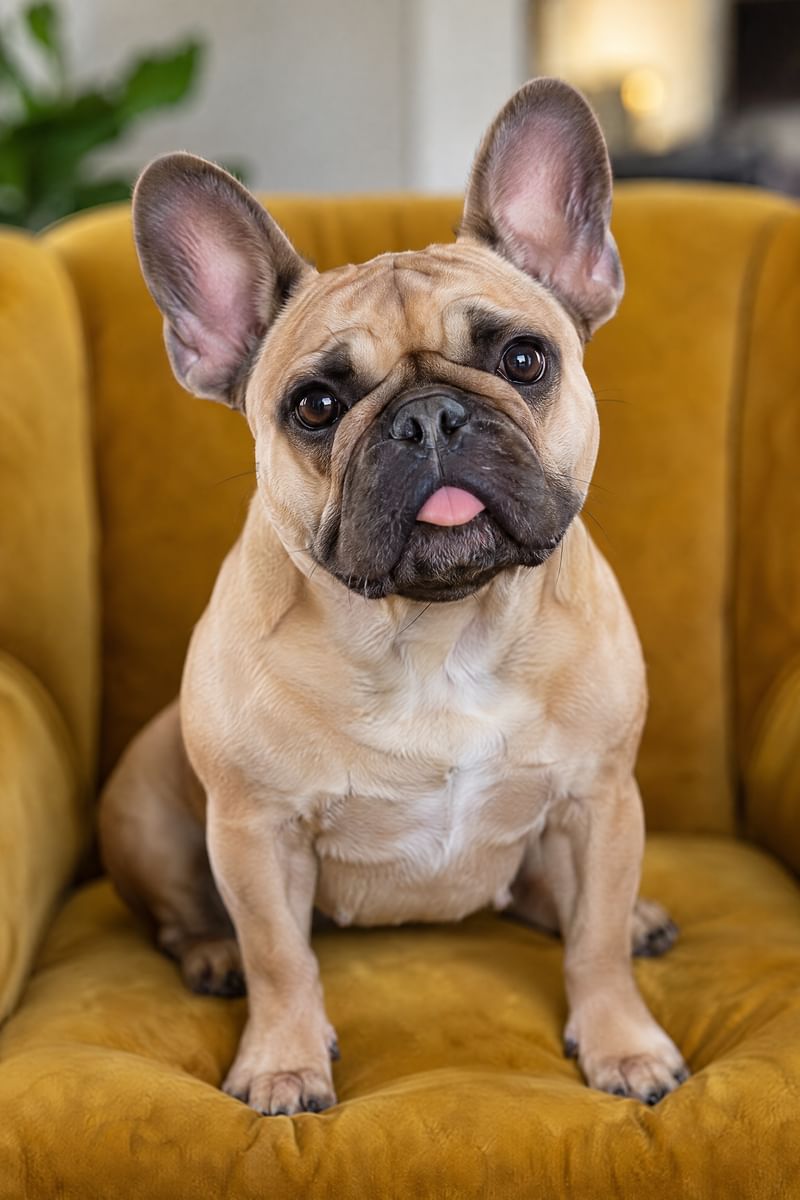
Funny faces. Yawns, tongue-outs and licks, read by a small model Pet Cue trained for this, running on the phone. On real photos it never trained on, 96 in 100 of its picks were real yawns or tongue-outs.
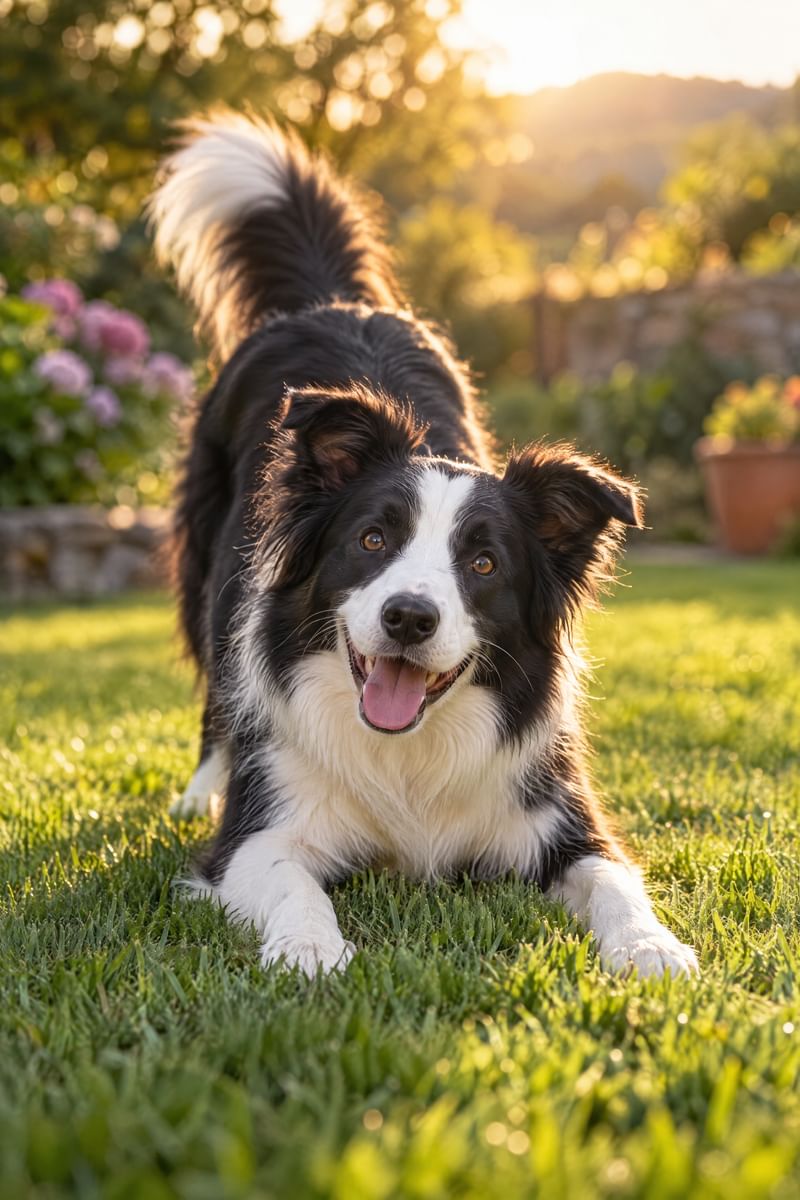
New poses. Sitting, lying down, a play bow, belly up: Pet Cue compares the pose with every photo already taken in the session and shoots when it is new and steady.
Every photo’s caption says what it caught, and each kind has its own switch in More. Moments work for dogs and cats, in Multi-Shot with Auto-shutter on.
Head tilt
Funny face
Funny face
New pose
Learns each pet
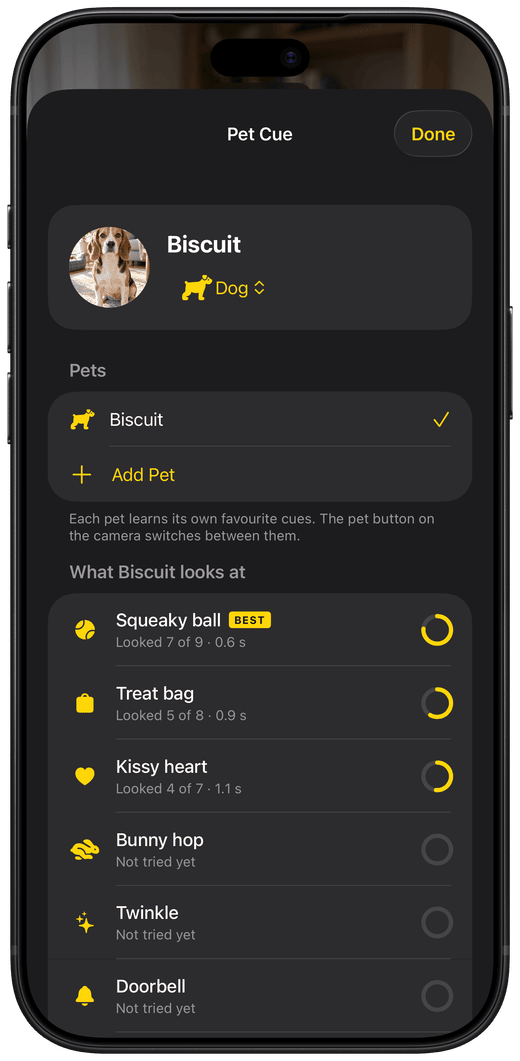
Learns what your pet loves.
Every cue is scored. The winner plays first.
Every cue is a small experiment: did your pet look, and how fast? Scores like “Looked 7 of 9 · 0.6 s” build up for each pet, and AUTO plays this pet’s favourite first.
Never stale. AUTO still tries the others now and then, and never plays the same cue twice in a row, because pets get used to a sound quickly.
Each pet on its own. Your cat’s favourite never overrides your dog’s.
Stays on your phone. Learning is never shared or pooled between users.
Cues made for pets
Sounds made for pets.
14 cues that turn their head, from a squeaky ball to a knock at the door.
Each cue repeats for a few seconds in different tones and glides between the phone’s speakers, so the sound seems to move. Novelty is what turns a pet’s head.
Squeaky ball
Treat bag
Bunny hop
Kissy heart
Pinwheel
Twinkle
Doorbell
Bird trill
Mouse
Kibble shake
Can opener
Knock knock
Meow
Crickets
Twinkle also pulses the flashlight gently beside the lens.
With Cue on, the cue strip shows AUTO and this pet’s best four. Choose which cues play for each pet in More > Choose Cues.
Knock knockAUTO picks the cue
Multi-Shot
Never miss the moment again.
For a photo shoot rather than one perfect photo, turn on MULTI in the camera menu. One tap and Pet Cue keeps going: a sharp photo every time your pet looks or does something cute, a new cue whenever it loses interest.
A photo per look. At most one every 0.6 seconds while your pet looks, borderline looks included, but only in still moments.
Every one checked. Blurry photos are kept and marked, and the count on the stop button counts only the sharp ones.
A new cue when interest fades. Two and a half seconds after a cue ends without a look, the next one plays. A session ends when you tap stop, or by itself after three minutes.
Ready in a second
Faster than finding the treats.
Pet moments last two seconds. Pet Cue opens from the Lock Screen, and the volume buttons take the photo.
Lock Screen camera
From Lock Screen to cue in one press.
Add Pet Cue to Control Center, the Lock Screen or the Action button. It opens straight into the camera without unlocking, cues and all, for the current pet, and the photos join the app the next time it opens.
9:41
Tuesday 6 October
Volume buttons
The volume buttons are the shutter.
Like the Camera app: press a volume button, or Camera Control, to take the photo or to start and stop a session. Handy when one hand holds a treat. Rather use the buttons for the cue volume? Switch it off in More.
Coming in an update
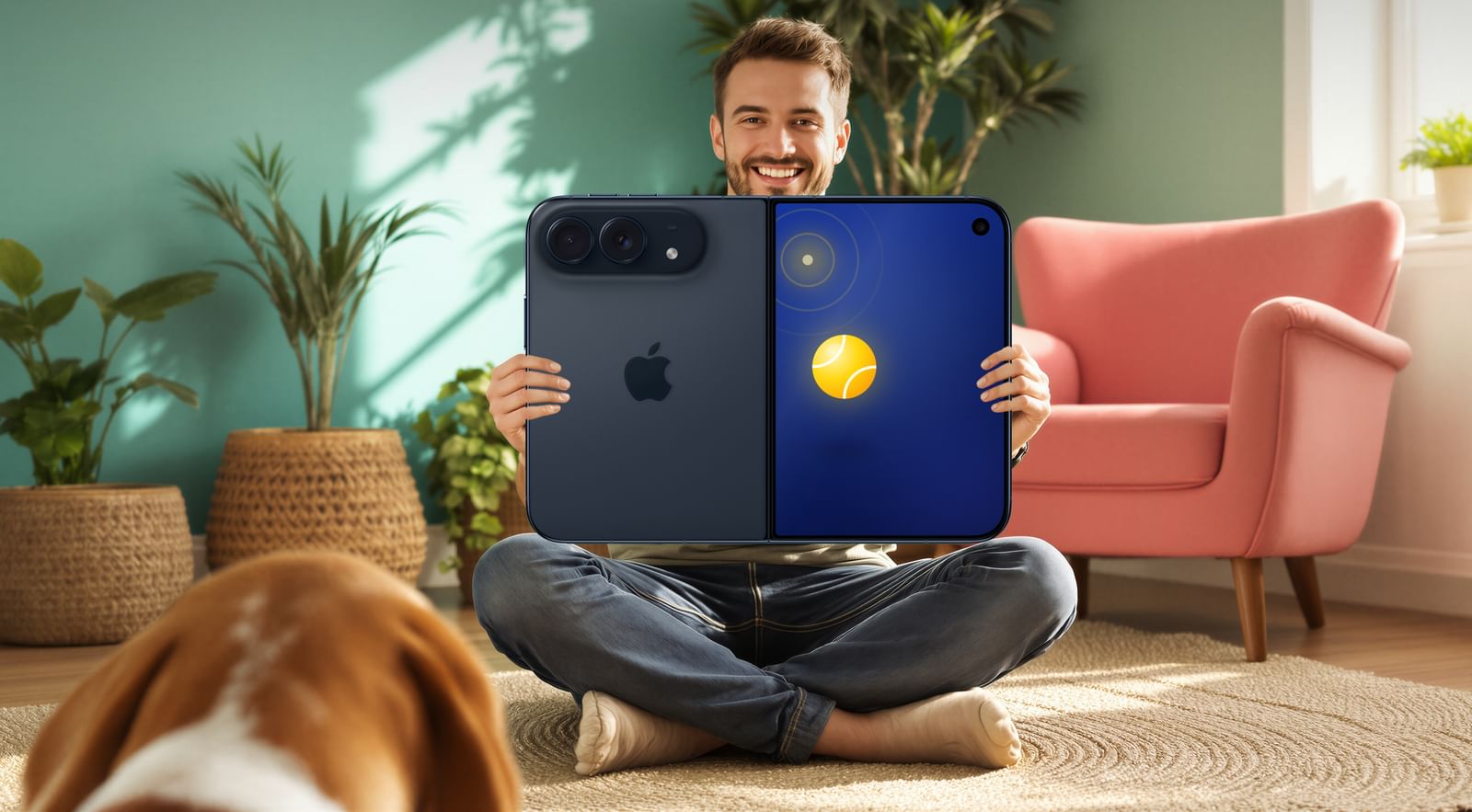
iPhone Duo
A screen for you, a screen for them.
Like Kid Cue on your Camera — but for those who have more furry kids.
On iPhone Duo, the cue plays on the outer display, right next to the lens your pet should look at, while the inner screen shows PET VIEW: what your pet sees.
Switch to the front camera and the cue appears on the screen itself: a small glowing window just under the camera, at full brightness, so your pet looks toward the lens, and you.
One app for the whole pack.
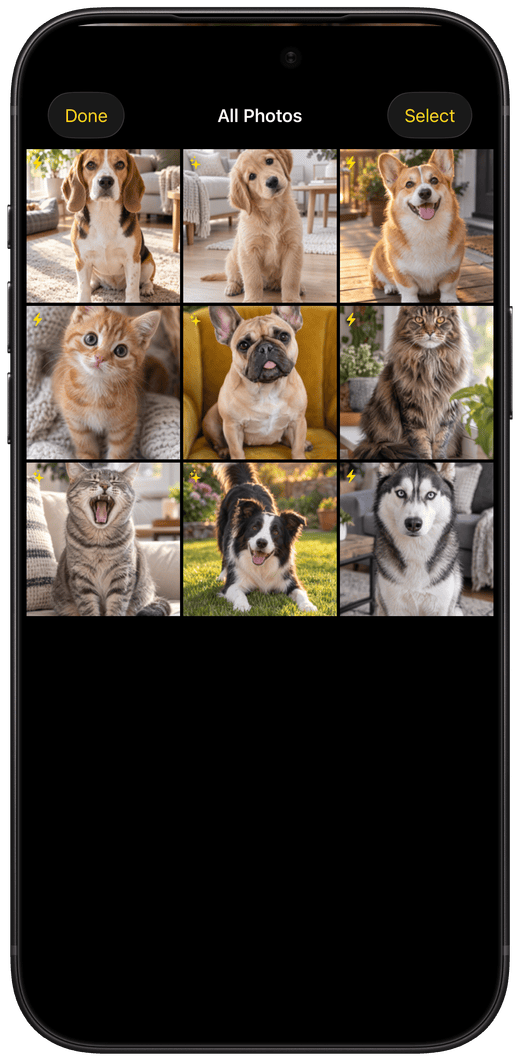
Unlimited pets, each with a name, a kind (dog, cat, bird or other), its own cues and its own learning. The pet button switches between them.
Every photo says how it was taken.
Auto-shutter · Looked in 0.6 s · Squeaky ballHead tilt · Squeaky ballTaken by hand
Large thumbnails, multi-select delete, Save to Photos and Share.
Two switches, three ways to shoot.
Cue and Auto-shutter each have a switch. Use them together, use the auto-shutter alone as a silent camera that waits for the look, or play cues and shoot yourself.
Every camera, every lens.
Rear or front, and every lens your phone has (0.5×, 1×, 2× or 3×), from a glass menu that unfolds from the Camera button.
Make it yours: six icon colours.
The same lens and paw on a different tile, in More > App Icon.
YellowSkyCoralMintLilacGraphite
A complete Guide.
More > Guide explains every mode with the app’s own buttons, how the auto-shutter decides and how learning works. Nothing is left to discovery.
In more than 40 languages.
The app and its store listings are translated, from Arabic to Vietnamese.
Private by design
Private. Offline. No ads.
Everything runs and stays on your phone.
No ads
No account
No tracking
Works offline
Pet detection, learning and Moments all run on the phone. There is no account, no ads, no analytics and no tracking in the app, and its App Store privacy label is “Data Not Collected”. The Android app doesn’t even ask for network access. Your pet’s photos never leave your phone unless you share them.
We think Pet Cue is the best way to photograph your dog or cat, because it solves the hard part: the look. A cue made for pets gets their attention, and on-device AI takes the photo the instant they face the lens, so you get eyes, not ears and tails. It is a one-time $2.99 purchase with no ads, no account and no subscription.
How do I get my dog to look at the camera?
Give your dog a reason to look at the lens, and be ready the instant it does. Get down to eye level in good light, then make a sound your dog doesn’t hear every day: novelty is what turns a head. Pet Cue does both parts: tap the shutter and it plays a cue made for pets (a squeaky ball, a treat-bag crinkle, a knock at the door), and its on-device AI takes the photo the moment your dog faces the lens. More tips: how to get your dog to look at the camera.
How do I get my cat to look at the camera?
Use sounds that mean prey or food to a cat: a bird trill, mouse squeaks, crickets, a treat bag or a can opener. Pet Cue plays these cues, learns which one your cat looks at fastest, and takes the photo the moment your cat faces the lens. Shoot in soft light, at your cat’s eye level, when it is calm. More tips: how to get your cat to look at the camera.
Will Pet Cue give me blurry photos?
Pet Cue is built never to hand you a blurry photo as the result. While it waits, focus and exposure lock onto your pet’s face and the shutter stays at 1/100 s or faster; it shoots only when your pet and the phone are still enough, then checks each automatic photo for blur at the eyes. A blurry one is kept and marked Blurry, and Pet Cue keeps trying until it has a sharp one. In very dim light it may take longer, or stop after a minute and tell you that more light helps. Photos you take by hand are not judged.
Does Pet Cue work offline?
Yes. Pet detection, learning and Moments all run on your phone, and Pet Cue needs no internet connection, account or sign-in. The Android app doesn’t even ask for network access.
Can I download Pet Cue yet?
Pet Cue is coming soon to the App Store for iPhone and to Google Play for Android. The iPhone app needs iOS 26 or later; the Android app needs Android 8.0 or later.
 Pet Cue